Dendritic Cell Therapy
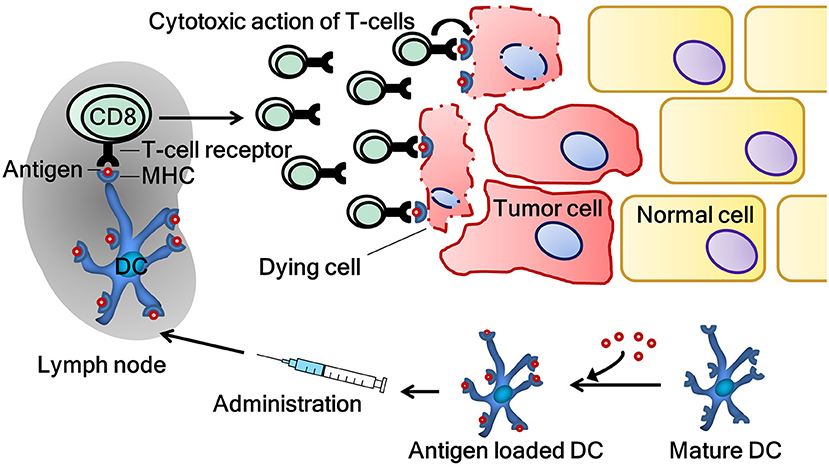
According to this article in Nature Communications, Dendritic cell vaccines, in particular type 1 Dendritic cells, are being used to treat cancer patients through immunotherapy. Type 1 DC’s (dendritic cells) have the ability to uptake and present tumor-associated antigens therefore priming effector cells to have the ability to respond effectively to tumor cells. Furthermore, dendritic cells in particular are able to move in between lymphoid and non-lymphoid organs and control inflammation and lymphocyte homing, which are important for long-lasting anti-tumor effects. The vaccines are made of patient-derived DC’s made from isolating hematopoietic stem cells and treating them with cytokines for differentiation and then with TAA’s (tumor-associated antigens). This immunotherapy seems quite promising as it has been proven safe in multiple clinical trials, however, the effectiveness of this treatment falls short when put in vivo due to functional deficiencies in the cells that comprise vaccines. I think that the future of disease-treatment– and potentially cures — lie in stem cell research and technology. When these types of treatments become available for public use and more effective, the limits of previously incurable disease therapies will be non-existent. Having a brother with an autoimmune disease (type 1 diabetes), I find stem cell research and dendritic cell therapies to be extremely important and something I may want to be involved with in the future.
T Cell Therapy for Melanoma
According to this article in DTU Health Technology, ACT, or Adoptive T-cell Therapy is an immunotherapy that works well for patients with malignant melanoma. ACT has currently been tested to see whether or not naive antigen-specific T cells in combination with a tumor-antigen and a toll-like receptor (TLR7) in a liposomal formulation will work for curing cancers beyond melanoma. Findings from this study showed that this formulation did in fact induce antigen-presentation and on APC’s and infiltration of T cells to improve tumor control in vivo. Furthermore, it was found that relapsing tumors had become immune excluded and unregulated immune suppressive mechanisms. I hope that research like this continues to prove the benefits of immunotherapy and the treatment of aggressive diseases such as cancers. I think it is amazing that ACT has already been proven effective for melanoma and it gives me hope for what this means in curing other types of cancers.
How it works, Side effects, Cost?
Dendritic and T cell therapy for various cancers mentioned above works by teaching the immune system to recognize mutated self-cells that are cancerous when they present mutated antigens. Once these mutated cells are recognized, the immune system can eliminate them. This can happen with tumor cells or melanoma cells. The most common side effects of immunotherapy include skin reactions, flu-like symptoms, and many others such as hormone changes, shortness of breath, weight gain, and diarrhea accrording to this article by Cancer.Net. The cost of these types of therapies averages around $250,000 a year when combing drugs, which is quite common. The cost and side-effects of these drugs seem to be detrimental to me, but almost inevitable given the deadliness of most cancers. Not only would the discovery of more immunotherapies be revolutionary, but also the discovery of how to make them more accessible and safe.

 Julia's Microbiology Blog