This Year’s Flu Vaccine
According to a recent article by the CDC, this year’s flu vaccine targets 4 different antigens, or strains of the influenza, so it is a quadrivalent inactivated influenza vaccine. It was grown in cells, as opposed to eggs. The FDA has approved a slightly higher dose this year for children from six to thirty-five months old, as opposed to previous year which allowed only half of the normal dose to be administered to children this age. The CDC also warns to receive the vaccine closer to “flu season”, stating that July or August vaccination may be too early and lead to reduced protection later in the season. Unfortunately, it is slightly too early to predict the effectiveness of this year’s vaccine because researchers must compare infection rates of those unvaccinated to those that were vaccinated. Furthermore, the two factors that determine the likelihood that the flu vaccine will protect an individual are 1) individual characteristics such as their age and health and 2) the similarity between the flu vaccine and the flu virus being spread (CDC, 2019). Getting a flu shot is not only important for protecting yourself, but also for protecting your community and others who may not be able to be vaccinated. I think that it is interesting how every year, the flu vaccine protects against new forms of the influenza virus and has specific recommendations depending on your age. For more information, look up recommendations on google to learn where, how, and when is the most effective to receive your flu shot.
Forget about the Coronavirus
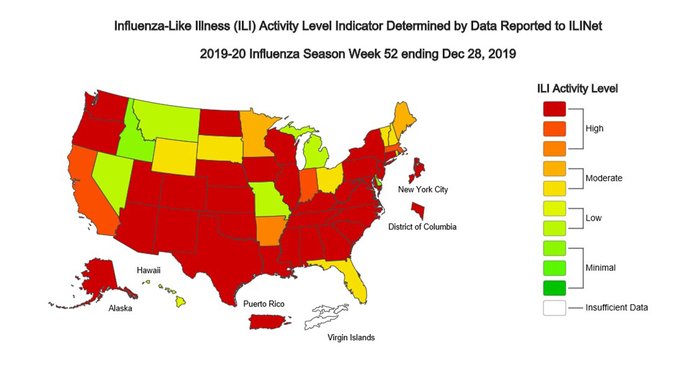
In an article by CNN, the author warns that the real threat to worry about in 2020 is influenza, despite current fears and media coverage of the new coronavirus (2019-nCoV). Influenza has already killed 10,000 people just this season (2019-2020) and at least 19 million have been infected with the virus. As far as current research has shown, the flu virus appears to be much more infectious than the coronavirus because it is spread through droplets that one can breathe, sneeze or cough out, and can be transferred through fomites. One of the most worrisome facts of the coronavirus in my opinion is its long incubation period in comparison to the flu. This means that people can spread the coronavirus for much longer without knowing they are infected. However, according to a board of director on the American Academy of Family physicians, the fear from the coronavirus comes from the unknown nature of this virus, as opposed to influenza which has been around for years. The flu’s danger comes from secondary infections, which usually emerge when the immune system is compromised or weak (Andrew, 2019). I think that a lot of fear surrounding the coronavirus involves xenophobic attitudes towards china, and an underplay of the real dangers that the flu virus imposes on the United States every year.
Why does the Influenza Vaccine Change every year?
In Microbiology, we are learning about antigenic shift and drift. It’s very interesting because it’s so relevant, especially to influenza viruses. Due to its constantly changing nature, it can be hard for scientists to keep up by producing vaccines that match the current flu viruses. Every year, scientists try to predict as best they can what antigenic properties— or surface proteins — will be targeted by the vaccine that year according to an article by the CDC. Antigenic Drift occurs when genes in a virus mutate, resulting in viruses that are very similar to one another, yet requiring different antibodies to recognize and kill them. Vaccines that are produced to protect people from one virus will often protect people from viruses that are closely related to each other. However, with antigenic drift, the antibodies will not be able to recognize a virus in your system because it is sufficiently different. Antigenic shift is less common, but occurs when an animal-infecting influenza grows HA and NA proteins which can infect humans, and becomes a human virus with no antibodies present in humans (CDC, 2019). I think that antigenic shift is more threatening, due to the fact that no one has antibodies for these types of viruses, yet antigenic drift is more common so we must worry more about this type of mutation.


 Julia's Microbiology Blog